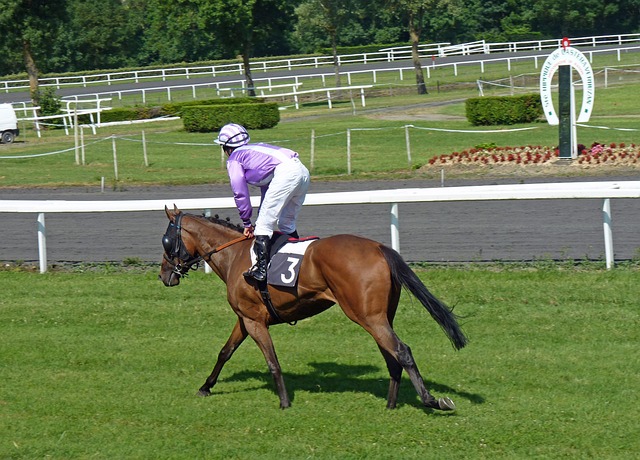
 Riding a racehorse at full speed requires more than physical fitness. The decisions a jockey makes in a matter of seconds (choosing a line, managing pace, reading rival riders) all come from the mind. Elite jockeys are not just athletes. They are trained thinkers who spend as much time sharpening their mental edge as they do conditioning their bodies. Understanding how they do it reveals a lot about peak performance in any high-pressure profession.
Building Mental Toughness Through Deliberate Preparation
Top jockeys don’t arrive on race day hoping to feel sharp. They prepare for it systematically. Visualization is one of the most widely used tools among professional riders. Before a race, many jockeys mentally walk through every stage of the event (the starting gate, the first bend, the final straight), picturing how they will respond to different scenarios. This rehearsal reduces uncertainty and makes the actual race feel familiar, even when conditions change unexpectedly.
Breathing techniques also play a significant role. Controlled breathing lowers heart rate and calms the nervous system without dulling alertness. Many riders practice this in the hours before mounting, using it to reach a steady, composed state of mind. It is the difference between being tense and being ready. These small routines, repeated consistently, become automatic triggers that signal the brain to shift into performance mode.
Self-talk is another tool that professional jockeys use deliberately. The internal dialogue a rider carries into a race directly affects their confidence and decision-making. Experienced jockeys actively replace doubt with clear, instructional thinking, reminding themselves of the horse’s strengths, the race plan, and their own ability. This is not blind positivity. It is disciplined mental management.
Staying Present Under Pressure: Focus Techniques That Work
Focus during a race cannot be forced. It has to be trained. Many elite jockeys work with sports psychologists to build what is often called a pre-performance routine: a consistent sequence of thoughts and actions that switches their attention fully onto the task ahead. This might include a specific warm-up routine, a moment of stillness before mounting, or a set of mental cues that block out crowd noise, media pressure, and personal distractions.
Mindfulness training has also become more common in professional racing. The practice of staying fully present (noticing what is actually happening rather than anticipating what might go wrong) directly improves a jockey’s ability to react in real time. During a race, a rider who is fully present can feel subtle shifts in the horse’s stride, spot gaps in traffic, and adjust their position with precision. A distracted rider, no matter how skilled, will miss those cues.
Emotional regulation is equally important. Races do not always go to plan, and the jockeys who maintain their composure after a poor start or a tight early position are the ones who give themselves a chance to recover.
Learning to process frustration quickly, without letting it cloud judgment, is a skill that separates good riders from great ones. It requires practice, self-awareness, and often the guidance of a mental performance coach.
Making Space for Life Outside Racing
As strange as it sounds, no athlete can sustain peak performance by focusing on their sport alone. The mind needs variety, rest, and stimulation from different directions. Jockeys understand this, even if they don’t always talk about it openly.
A mental state that is permanently locked onto racing becomes rigid and fatigued over time. Stepping away from the sport, properly, not just physically, keeps the mind elastic and the motivation strong.
Hobbies are not a luxury for elite athletes. They are part of a functioning performance lifestyle. Among jockeys, golf is a particularly popular choice. The reasons make sense: it requires calm under pressure, strategic thinking, and complete concentration on a single action at a time. These are the same mental qualities that make a great race rider. Golf also offers low physical impact, which is important for athletes who need to protect their bodies, and it provides a clear competitive outlet in a relaxed social setting.
Of course, jockeys have a wide range of interests, and all of them deserve space. For those who enjoy digital entertainment, online platforms offer a convenient and engaging option. Casino platforms, for instance, allow users to try their hand at slots and table games from anywhere. Sites such as Bof Casino have become quite popular today due to their broad game offerings, and their easy accessibility makes them even more convenient for riders who spend significant time traveling between events.
Another hobby that has grown in popularity among athletes, including jockeys, is cooking. It sits at the intersection of creativity and discipline: two qualities that elite riders already possess in abundance. For jockeys, who must manage their weight carefully throughout their careers, learning to cook gives them direct control over their nutrition. Thanks to platforms such as YouTube, Tasty, and BBC Good Food, getting started has never been easier: thousands of recipes, tutorials, and meal-planning guides are available at the touch of a screen.
Mental Training Never Stops
Physical ability has a ceiling, and most jockeys reach it relatively early in their careers. Mental ability does not work the same way. The riders who remain competitive well into their thirties and beyond are almost always those who have invested seriously in their psychological development.
They have learned to manage pressure, recover from failure, maintain focus across a long season, and build a life that supports their performance rather than draining it. The mind, well-trained and properly looked after, is the one asset that keeps improving with experience.
